
The Phaistos Disc Mystery: Solved

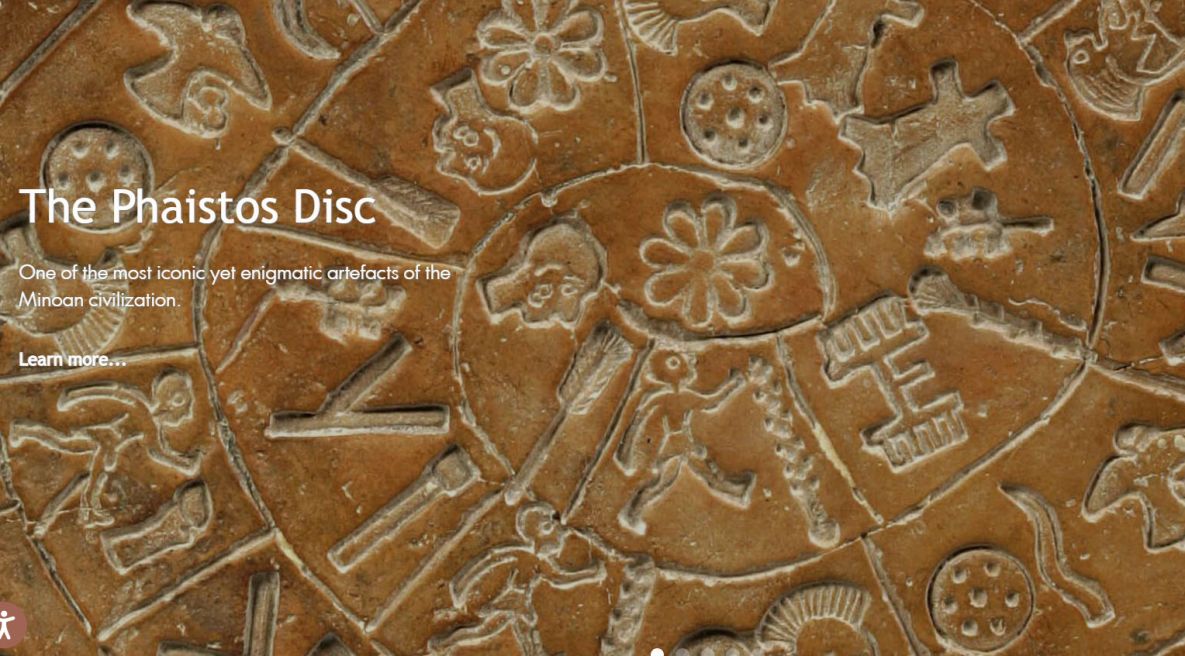
Above, the artefact as presented on the Cretan Heraklion Archaeological Museum‘s official website.
by Rina Brundu Eustace
Swamped in some pretty demanding studying — history, philosophy, the whole deal — I have spent several months now pushing my mind further than strictly necessary. Hours upon hours in front of a computer screen can hardly do one much good. But that is the nature of things; everyone follows their own path.
Any distraction, then, must earn its place. It must provoke reflection, stir curiosity — otherwise one might as well keep working. Speaking of curiosity: whether by chance or something closer to fate, some two weeks ago I found myself once again face to face with the famous Phaistos Disc.
I had long been aware of its existence and its history, of course, and there was a period during which I had resolved to attempt a systematic decipherment; however, as is invariably the case, other, more pressing obligations took precedence. Upon conducting a search of the available online literature, I discovered that certain scholars had claimed to have cracked its code. According to those sources, the researchers responsible for this purported breakthrough maintained that the inscription constitutes a 3,700-year-old Minoan hymn dedicated to the mother goddess, and that they had identified lexical units such as “great lady” and “pregnant woman”, asserting furthermore that the text had been deciphered to a completion rate of 99%.
The mother goddess?? I confess that this construct invariably provokes frustration and anger. My own studies have led me to conclude that the figure of the mother goddess does not, in fact, represent a historical or religious reality recoverable from the ancient record; rather, it is an interpretive construction, one that has been repeatedly deployed to paper over the considerable gaps that persist in our understanding of the ancient world. But to return to the matter at hand, at a certain point in my research, I came across a recording of the aforementioned hymn performed in what was allegedly the ancient Minoan language — or so I was led to believe.
Something, however, did not sit right. I did not doubt the expertise of the scholars involved, but something failed to resonate — some instinct resisted.
I have, from an early age, been drawn irresistibly to mysteries, and there is scarcely an unsolved problem that I have not examined from multiple angles. As a child, I worked through puzzles and crosswords with my father; later, I devoted a period of my life to writing detective fiction — not of the conventional kind, but the sort of intricate, hermetically sealed puzzle that John Dickson Carr made his own, the kind that demands, as Hercule Poirot would say, the rigorous application of the little grey cells.
Over time, this passion for the unexplained has proved no less important to my scholarly pursuits, whether directed toward ancient history (and the mysteries of the megalithic civilization) or philosophical inquiry within the quantum and fundamental reality.
In truth, there are very few questions I have left unanswered to my complete intellectual satisfaction — no small feat, I should add, given that I am rarely an easy mind to satisfy.
It was at this point that I resolved to take that long-overdue detour from my principal research: my curiosity had, at last, been sufficiently aroused. I would devote a few days to a close examination of the text contained in the Phaistos Disc, and determine whether my intuitions had any foundation. Had I found myself mistaken from the outset, I would have abandoned the endeavour and left the field to those already working on it with considerable distinction.
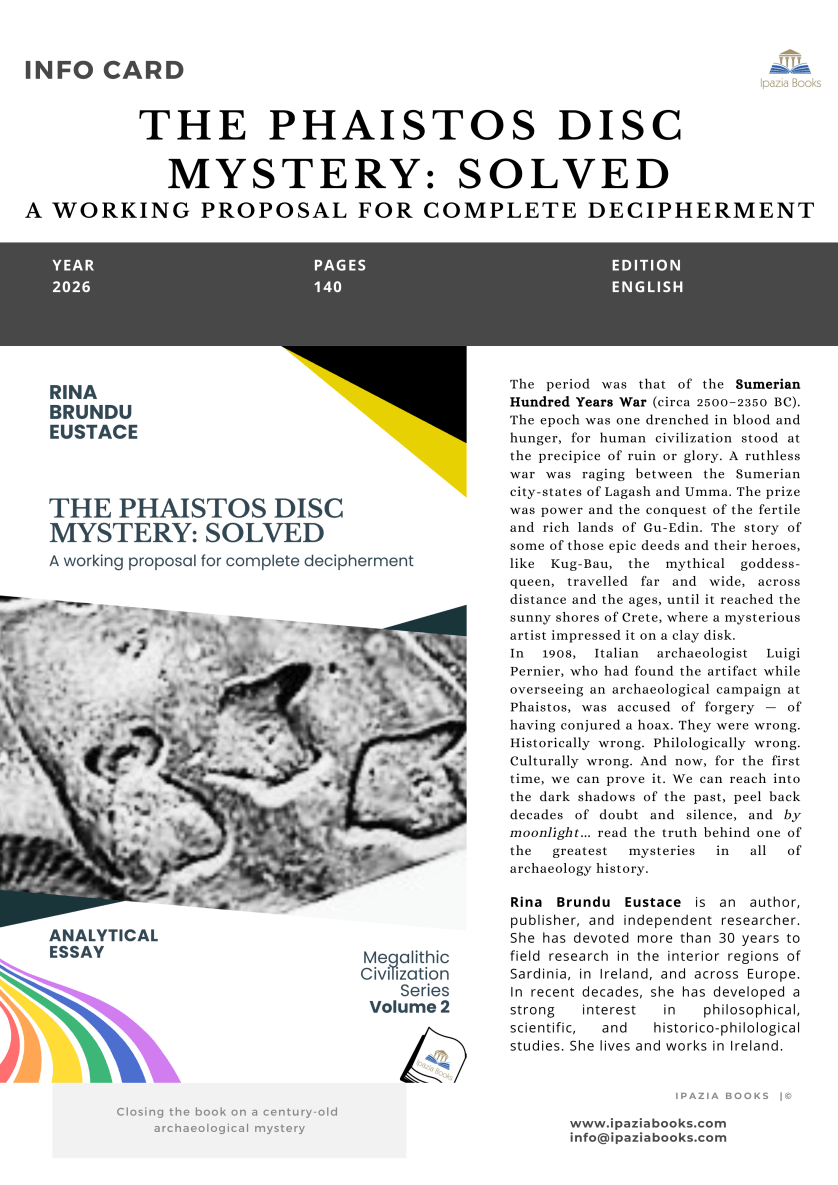
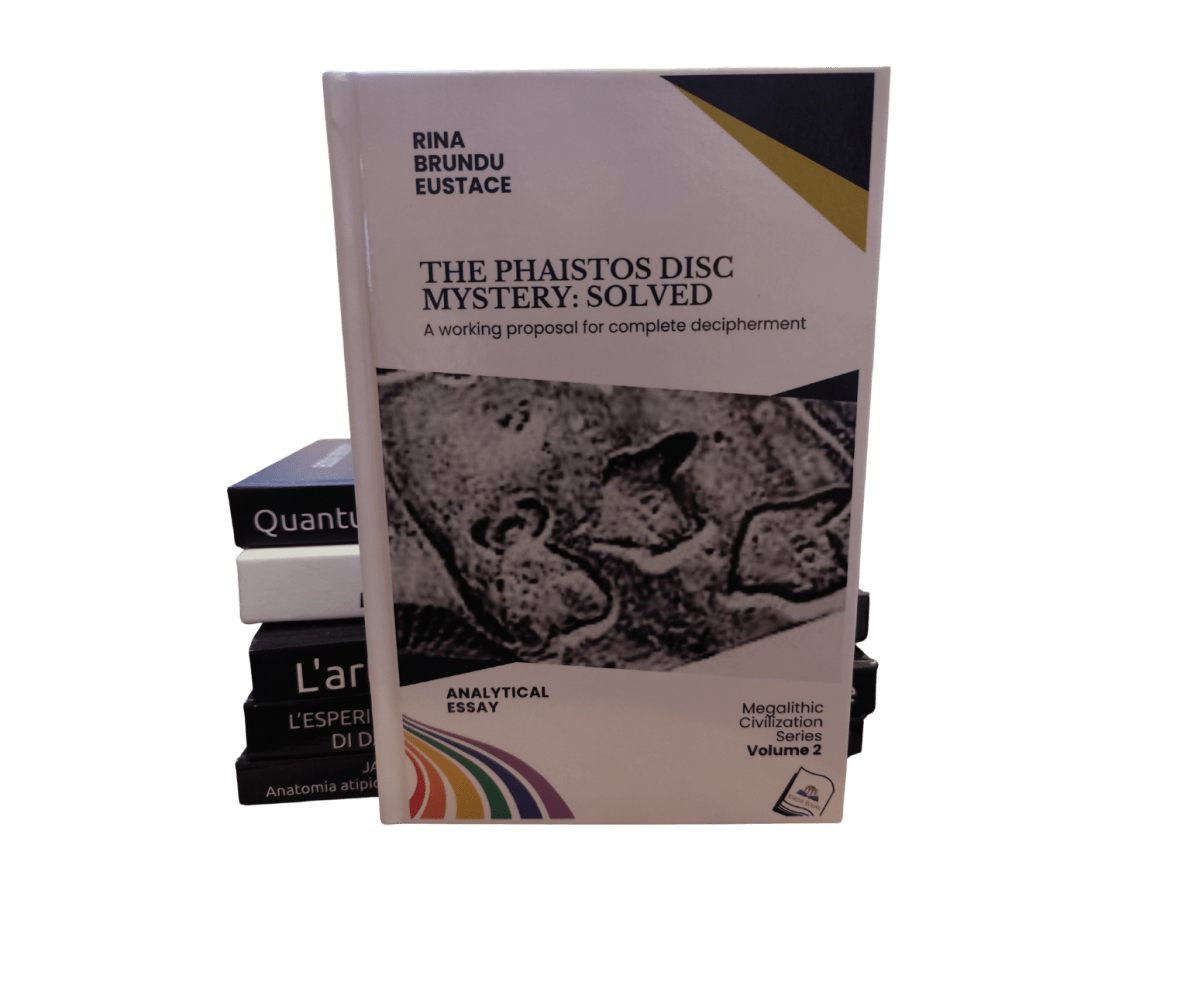
What is contained within the volume The Phaistos Disc Mystery: Solved, edited by Ipazia Books, are the notes — methodological and otherwise — that accompanied this inquiry, one that ultimately proved far more instructive than I had anticipated.
On February 17, 2026, I had good reason to believe that I was the first person in over four millennia — and possibly considerably longer — to read the story that had been impressed on the famous Phaistos Disc. As will become evident upon reading the related short essay I wrote, it is precisely the internal coherence of the discourse that emerged from the decoding process which permits this claim to be advanced with a degree of confidence that leaves little room for reasonable doubt.
I’ll admit it though: those endless decoding sessions were hardly what any sensible person would call a break from studying — my eyes and brain lodged their complaints quite vocally. But then again, curiosity never really asks permission, does it?
The encouraging news is that for some, the pursuit of study and learning represents the finest vacation the mind can take — a journey into remarkable territory where few, if any, have ventured before. This, as it happens, is precisely the experience I found myself immersed in just a few weeks ago.
Rina Brundu Eustace
Dublin, February 2026
Editorial Note
Anyone wishing to contact the author regarding the topics addressed in this book can do so by writing to the address below.
info at ipaziabooks.com

 LA BARBA DI DIOGENE
You must be logged in to post a comment.